
As the Holidays draw near, and we get farther and farther away from our summer trip to Africa, it's been a gift to be able to look through the footage we shot and photos we snapped to remember what an incredible journey we had.
Some of you may remember from our post in June that we had the opportunity to visit The Olevolos Project just outside of Arusha, Tanzania. The Olevolos Project is an organization that strives to "develop young leaders in the Olevolos Village through formal schooling, tutoring programs, and extra-curricular activities." One thing I can attest to from our travels, however, is that it is one thing to say that's what you're about; but it's a very different thing to actually be those things and work towards them every single day. Everyone at The Olevolos Project walks that walk, and does it with a HUGE smile.
Don't take my word for it... just watch our brand new video about The Olevolos Project. It is guaranteed to make you smile!
Wednesday, December 8, 2010

Tuesday, November 16, 2010
Energy in Common- Flip that switch!
The smell of cooking fires.
Certainly one of the sensory souvenirs we left Africa with. Indeed throughout the developing world, energy poverty (lack of access to clean, safe, reliable energy) is something you can physically feel.
Energy in Common is a wonderful organization that uses the fundamentals of micro-finance to help entrepreneurs in the developing world improve their livelihoods through clean, modern energy technologies. In turn, lenders from the developed world get carbon offsets for their investments.
Our 30 sec spot for EIC attempts to tell this story in an energetic and passionate way. Take a watch! Its sure got us looking at every light switch we flip as a small miracle.
Wednesday, October 20, 2010
NCLEJ - Moving Mountains
As we are catching up on sharing some of the videos we did earlier this year, we simply can't forget NCLEJ - the National Center for Law and Economic Justice.
NCLEJ is a nonprofit organization that advances the cause of economic justice for low-income families, individuals, and communities. Their work is hugely important and very often overlooked. While NCLEJ doesn't work with individual clients, they do tackle the systematic stuff that ends up moving mountains. It was a challenge to create a video without personal stories, but with the help of solid music and motion graphics, I think we created something that will help add life and vitality each time NCLEJ goes to tell its story.
NCLEJ is a nonprofit organization that advances the cause of economic justice for low-income families, individuals, and communities. Their work is hugely important and very often overlooked. While NCLEJ doesn't work with individual clients, they do tackle the systematic stuff that ends up moving mountains. It was a challenge to create a video without personal stories, but with the help of solid music and motion graphics, I think we created something that will help add life and vitality each time NCLEJ goes to tell its story.
Thursday, September 30, 2010
The Bronx River Alliance- I am the Bronx
 One afternoon late this spring I came upon the boy in this picture skipping rocks with his friends. I should say they were trying to skip rocks. In the Bronx you get the feeling that no matter how streetwise our urban youth may seem, they still have lots to learn out on the water.
Still this kid came right up to me and began to tell me all about his river. We were in Concrete Plant Park, a gorgeous community park developed by the Bronx River Alliance and apparently there were all kinds of cool things to see. He showed me where crabs live under the rocks. He told me about a few of the ducks and who was "with" who. He pointed to the massive scrap metals yards in the distance. I showed him how to skip a rock.
This was the highlight of the few days we spent in the Bronx putting together a video for the Bronx River Alliance. It was symbolic of how many treasures there are in a place that is notorious only for it's severe problems. What I loved was this teenager's unabashed interest in nature. In a place that I'm sure demands some toughness to get along, his gentleness reflected that of the river... an oasis in a busy borough. He reminded me that there are beautiful things everywhere. Especially in the Bronx.
Enjoy this video and get out to the Bronx River some time!
Monday, August 16, 2010
Building Futures- When I Walk
It is the deep beauty and privilege of childhood to be able to smile in a difficult place.
That's what I learned on one hot day walking along a winding dirt path towards the hillside school yard of Mbaka Oromo Primary. Ahead of us, two girls walked. Bare feet. Torn sweaters. No books. Giant smiles. As they continued their dawdling dance towards school I realized that this is the side of Africa we never get to see. This is the image that should move us all to contribute to a better life for Kenyan kids.
In many ways Western Kenya is a difficult place.... one of limited opportunity, poor health care, fragile ethnic tensions and even food insecurity. But as these kids made their way to school, I believe they were thinking about what all kids think about on their way to school.... pushing each other in the mud.
It's our great pleasure to present the first fruit of our trip to Kenya.
We hope this video will share with you the tremendous enthusiasm these children have for learning and the boundless love they show for their world, however torn. Hats off to Building Futures for the work they do to make sure that these kids are walk towards something... a solidly built school and a solidly built future.
That's what I learned on one hot day walking along a winding dirt path towards the hillside school yard of Mbaka Oromo Primary. Ahead of us, two girls walked. Bare feet. Torn sweaters. No books. Giant smiles. As they continued their dawdling dance towards school I realized that this is the side of Africa we never get to see. This is the image that should move us all to contribute to a better life for Kenyan kids.
In many ways Western Kenya is a difficult place.... one of limited opportunity, poor health care, fragile ethnic tensions and even food insecurity. But as these kids made their way to school, I believe they were thinking about what all kids think about on their way to school.... pushing each other in the mud.
It's our great pleasure to present the first fruit of our trip to Kenya.
We hope this video will share with you the tremendous enthusiasm these children have for learning and the boundless love they show for their world, however torn. Hats off to Building Futures for the work they do to make sure that these kids are walk towards something... a solidly built school and a solidly built future.
Saturday, July 17, 2010
Back Home- Slow lessons from the students of AFS
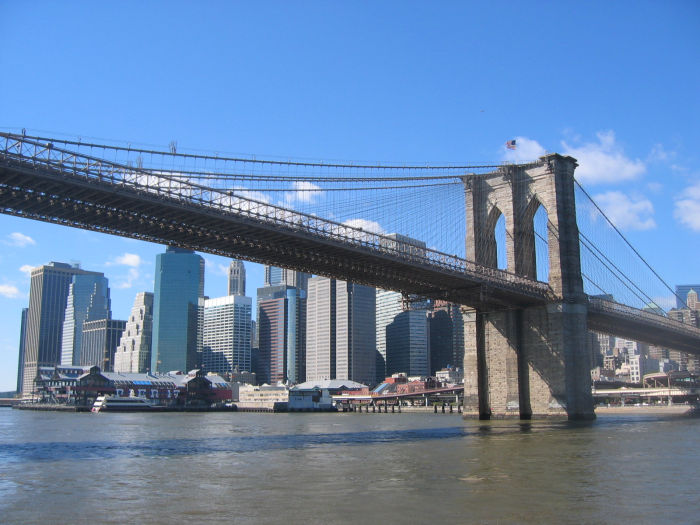 I was riding my bike the other night and it hit me. I’m back in Brooklyn.
This wasn’t a revelation. We’ve been back from our African adventure for over a month. It wasn’t that I suddenly “woke up” riding my bike in Brooklyn. To the contrary…. it was this sinking feeling at how quickly our adventure had been covered up by the waves our daily life back here in America. I was back on my bike… going back to my apartment after a long day, back to my kitchen, back to my dinner.
I think we are all hitchhikers who just like to play house. We are made of whatever we have eaten for breakfast…. Whatever color and nationality the dirt is under our fingernails from the day’s travel. We like to think that we inhabit every moment but the truth is that every moment and experience inhabits us (and then moves on).
 In some ways it has been disheartening to Erin and I that we can’t keep the sights and sounds of our remarkable travels in our brains and on the tips of our tounges… but we cannot. I can tell the rest of this year will be spent carefully crafting videos for our various project with not only the goal of telling these important stories, but also with an eye towards meditating on the people we met, the problems we saw and the occasional small moment that made us feel like there truly is a world worth doing anything we can to improve.
But as I’ve said… life moves on (whether you want it to or not!) and so does our work. This month, while I’m already lamenting the quick fade of my Kiswahili skills, we had the pleasure of working with one of our favorite clients AFS, one of the oldest international exchange organizations in the world.
We shot two videos for AFS, interviewing exchange students at the end of their 10 month high school exchanges and to my surprise the answer to my malaise came from the mouths of these impressive young people.
Half way through one interview, a student who spent a year in Ghana was struggling to define her difficult experience. As she stumbled I saw familiar look in her eyes, the look of all people who see things so different and wonderful that the right words can’t be found. But then struggled on to beautifully about the magic of bonding with her host brothers, of eating with her hands, of learning to play the drum, of traveling the country.

What we learned from the students of AFS is that it takes a lifetime to absorb the lessons of traveling abroad. It takes patience and creativity to tell these stories. From Good Eye Video we can promise the full force of our talents and the commitment of our hearts to try to share a piece of the gifts we were given by people in little villages and in sprawling slums. Of simple words and food and sights that really have changed us… even though we don’t know it (yet).
Monday, June 21, 2010
Is it good or is it bad?
Joseph turned to me and smiled. “So life in the US…. is it good or is it bad?” We were moving along the ridge of a mountain from Narok to Nairobi, the view of the Rift valley in all its vastness spilled out before us. This question from our driver friend took me a moment to process. In some ways most of our experiences have been in the pursuit of understanding what life here in Kenya really consists of. It wasn’t until Joseph’s question that I realized that our time in Kenya may turn out to be more of a mirror to our own way of life than it is an investigation of someone else’s.
When we create a video for a non-profit there is always a clear temptation to use binarys… these people suffer, these people triumph…. this is a problem and here is the solution. In Kenya I’ve found myself searching in the same way. Is this a country of farmers, plagued by HIV, poor governance, tribal conflict and broken infrastructure? Or is it a country of people who work from dawn to dusk. Who have learned how to expertly use their fertile soil. Who have put their children’s education above almost all else. Who create instant businesses on blankets by the side of the road. Who love to dance and sing and smile. A people who, even if they are literally destitute, will insist you take tea with them.
I’ve had trouble figuring out whether life here is good or bad and of course that’s because there is no such answer. Kenya is all of these things. As visitors (not to mention storytellers) it has to be our job to consider it all … the good and the bad.
In our American minds there are immediate aspects of life in Kenya that conflict with our sense of “a good life”. The roads here make the potholes of Brooklyn feel like the Autobahn. Female Genital Mutilation is still practiced. Bride Inheritance. Ethnic Violence. Medical care is a luxury item, which puts our entire recent medical debate into perspective. Mostly the opportunity to succeed and improve ones standard of living does not compare. In Kenya with a good mind, a strong immune system and a good education you can still find yourself unable to succeed. I guarantee there are a few Nobel, Pulitzer, Oscar winners hoeing beans right now in the fields of Kenya. This is life without a safety net (you’re lucky if you have a big strong family). This is life without the helping hand of the government. The crippling corruption here is unimaginable to us.
On the other side there are so many aspects of life here which I think any visitor is enchanted by. We have been welcomed here in a way that seems impossible in America. One day a woman (who spoke little English) walked us almost a mile before we realized she was going the other way. She simply wanted to make sure these visitors in her community found their way.
Kenyans use what they have, they conserve, they recycle. They are connected to the land (almost everyone here has picked corn and milked a cow in their life). In my own American life, I’ve only dreamed of being this connected to the natural world. It makes all of the local, organic farming we do seem ridiculously backwards.
Keynan kids are hungry for education in a way that mothers across America would die for. School here can easily last 8 hours a day, 6 days a week.
See… as I think about life in Kenya my thoughts inevitably return to my own country, my own way of life. Have I taken for granted the stability of life that our rich economy and (by comparison) honest government has afforded? (Yes.) In fact, I’d like to invite small government-right wing Americans to take a trip here. This country is begging for more government… more schools, decent roads, clean water, medical care. A safety net. We consider all of these things as constants and we should not.
But don’t I want to actually LIVE on land? To know where my food comes from. To greet every visitor as though they were my long lost best friend. Don’t I want to be hungry for knowledge and treat the opportunity to grow as golden?
Kenya has taught us that engaging in “International Aid” can often turn into an exercise in superiority. “Look at these poor people and all the things we could do for them to fix their mixed up backwards country” But the truth is life here is filled with everything. A Mama dies from AIDS leaving five children orphans. A primary school choir sings a triumphant piece of Beethoven (without reading a note of music). Half of the students eat only once a day… a meal of corn flour. The same kids take turns jumping over a river, laughing the whole time.
Kenya has taught us that the American allergy to walking isn’t just making us fatter, but probably diminishing our inner life by 35%. It has taught us that we are obsessively clean. Obsessively afraid of being late. It has taught us that we have so conquered the quest for food, shelter and fire that we have often become bored (think of dog pedicures, everything in Brookstone, hot dog eating contests)
My answer to Joseph was pretty lame. How can you compare life in our country to life in this one? I had more money in my wallet than he would earn in a month. But the breathtaking view out my window… into the land of the Maasai… well, I’ll never have that. We’ll leave Kenya understanding the reason why half the world is clamoring to know our way of life. And why we, Americans, should be clamoring to know theirs.
When we create a video for a non-profit there is always a clear temptation to use binarys… these people suffer, these people triumph…. this is a problem and here is the solution. In Kenya I’ve found myself searching in the same way. Is this a country of farmers, plagued by HIV, poor governance, tribal conflict and broken infrastructure? Or is it a country of people who work from dawn to dusk. Who have learned how to expertly use their fertile soil. Who have put their children’s education above almost all else. Who create instant businesses on blankets by the side of the road. Who love to dance and sing and smile. A people who, even if they are literally destitute, will insist you take tea with them.
I’ve had trouble figuring out whether life here is good or bad and of course that’s because there is no such answer. Kenya is all of these things. As visitors (not to mention storytellers) it has to be our job to consider it all … the good and the bad.
In our American minds there are immediate aspects of life in Kenya that conflict with our sense of “a good life”. The roads here make the potholes of Brooklyn feel like the Autobahn. Female Genital Mutilation is still practiced. Bride Inheritance. Ethnic Violence. Medical care is a luxury item, which puts our entire recent medical debate into perspective. Mostly the opportunity to succeed and improve ones standard of living does not compare. In Kenya with a good mind, a strong immune system and a good education you can still find yourself unable to succeed. I guarantee there are a few Nobel, Pulitzer, Oscar winners hoeing beans right now in the fields of Kenya. This is life without a safety net (you’re lucky if you have a big strong family). This is life without the helping hand of the government. The crippling corruption here is unimaginable to us.
On the other side there are so many aspects of life here which I think any visitor is enchanted by. We have been welcomed here in a way that seems impossible in America. One day a woman (who spoke little English) walked us almost a mile before we realized she was going the other way. She simply wanted to make sure these visitors in her community found their way.
Kenyans use what they have, they conserve, they recycle. They are connected to the land (almost everyone here has picked corn and milked a cow in their life). In my own American life, I’ve only dreamed of being this connected to the natural world. It makes all of the local, organic farming we do seem ridiculously backwards.
Keynan kids are hungry for education in a way that mothers across America would die for. School here can easily last 8 hours a day, 6 days a week.
See… as I think about life in Kenya my thoughts inevitably return to my own country, my own way of life. Have I taken for granted the stability of life that our rich economy and (by comparison) honest government has afforded? (Yes.) In fact, I’d like to invite small government-right wing Americans to take a trip here. This country is begging for more government… more schools, decent roads, clean water, medical care. A safety net. We consider all of these things as constants and we should not.
But don’t I want to actually LIVE on land? To know where my food comes from. To greet every visitor as though they were my long lost best friend. Don’t I want to be hungry for knowledge and treat the opportunity to grow as golden?
Kenya has taught us that engaging in “International Aid” can often turn into an exercise in superiority. “Look at these poor people and all the things we could do for them to fix their mixed up backwards country” But the truth is life here is filled with everything. A Mama dies from AIDS leaving five children orphans. A primary school choir sings a triumphant piece of Beethoven (without reading a note of music). Half of the students eat only once a day… a meal of corn flour. The same kids take turns jumping over a river, laughing the whole time.
Kenya has taught us that the American allergy to walking isn’t just making us fatter, but probably diminishing our inner life by 35%. It has taught us that we are obsessively clean. Obsessively afraid of being late. It has taught us that we have so conquered the quest for food, shelter and fire that we have often become bored (think of dog pedicures, everything in Brookstone, hot dog eating contests)
My answer to Joseph was pretty lame. How can you compare life in our country to life in this one? I had more money in my wallet than he would earn in a month. But the breathtaking view out my window… into the land of the Maasai… well, I’ll never have that. We’ll leave Kenya understanding the reason why half the world is clamoring to know our way of life. And why we, Americans, should be clamoring to know theirs.
Subscribe to:
Posts (Atom)


